



5 October 2026
RESOURCES
Exploration of symptom burden during a wearable PD device (Viva Kompact) trial – a mixed-method analysis
Background
Symptom burden in peritoneal dialysis (PD) patients is high and multifactorial, partly due to chronic illness from kidney failure and partly related to treatment-associated symptoms from dialysis. Wearable PD systems may alter treatment delivery and fluid dynamics, potentially influencing symptom experience. Symptom frequency, severity, and patient reported experience were evaluated during a pre-pivotal study of a wearable sorbent-based PD system, Viva Kompact (Kompact).
Methods
Participants recorded daily frequency and severity for 23 predefined symptoms during a screening period (while on conventional automated PD) and during a 7-day Kompact therapy period. Semi-structured interviews were conducted to contextualize symptom reports and to provide feedback about their device experience.
Results
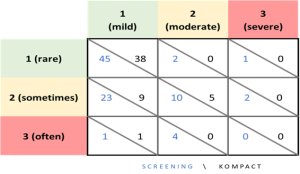
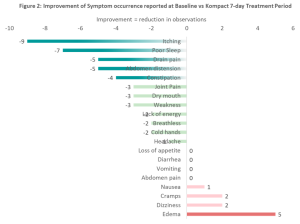
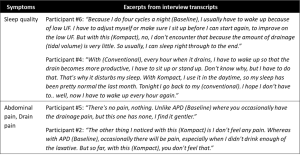
Eleven participants who entered the 7-day Kompact treatment phase recorded their PD-related symptoms. Overall, symptoms appeared to be less frequent with Kompact therapy compared with conventional APD therapy (53 vs 88). The 3×3 matrix showed that the majority of symptoms were mild, with only a few reported as severe. Symptoms of pruritus, poor sleep, and drain pain appeared to improve following initiation of Kompact PD therapy (Figure 2). During interviews, the tables illustrate quotes from some participants regarding abdominal pain, drain pain, and sleep quality while on Kompact PD therapy.
Conclusion
Participants experienced less symptoms during the intervention period, however due to the small sample size and short duration, conclusion of device superiority in symptomology needs further investigation.
Presented at ASN Kidney Week 2026, Denver, Colorado, United States, 21 – 25 October 2026.
Authors
- Htay Htay, Singapore General Hospital, Singapore
- Martin Schreiber, Cleveland Clinic, OH, United States; Vivance, CA, United States
- Arsh Jain, London Health Sciences Centre, Ontario, Canada
- Edwina Brown, Imperial College London, London, United Kingdom
- Sheena Gow, Vivance, Singapore
- Jason Lim, Vivance, Singapore
- Mandar Gori, Vivance, CA, United States
- Marjorie Foo, Singapore General Hospital, Singapore